
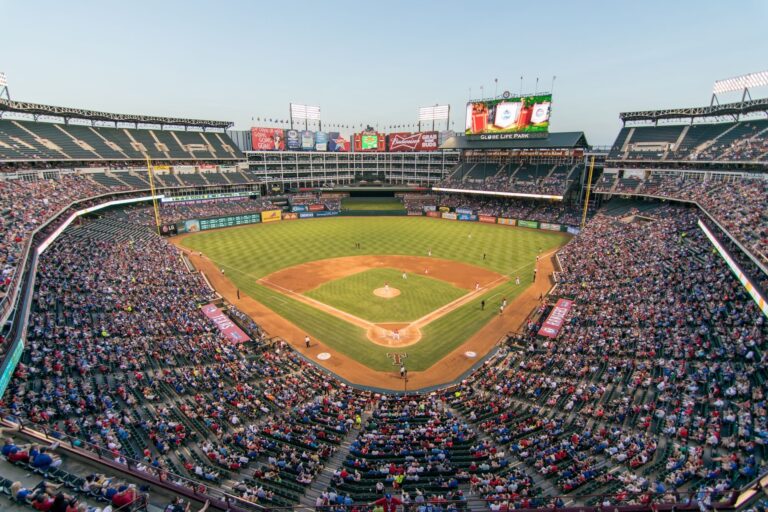
Sports

What to Bring to a Full Day at an LA Stadium
A day game can run six hours from the lot to the exit ramp, most of it in direct sun. The bag rules, the power, the heat kit, and what to leave home.
Stadiums and arenas around LA, checked for accessible parking, ramp routes, restrooms near your section, and a wheelchair platform you can see the field from.
Parking ✦ Ramps ✦ Tickets ✦ Restrooms ✦ Sightlines
A stadium day is settled by four decisions you make before you leave the house.
Buy the accessible parking pass in the same transaction as the seat, because it sells out separately.
Two hours before first pitch the ramps are empty and every elevator works.
The lot is rarely the problem. The half mile of concourse after it usually is.
Concourse width and elevator capacity are fine at 60 percent full and not at 100.
Stadiums are the easiest places to get an accessible ticket and the hardest places to have an easy day. The distances are what get you.
Which lot to book, how far it sits from your gate, and the grade of the route.
Step-free entry, ramp switchbacks, elevators, and concourse room on a sell-out.
How wheelchair spaces and companion seats get assigned.
Accessible stalls on your level, and how far you travel to reach one.
Counter reach at concessions, and your view when the row in front stands up.
Leave by the same route you came in. Stadium lots are split by dividers, and a different gate can add a very long lap to the end of your night.
The same five scores as every other write-up. At a stadium they are mostly about distance.
What a five looks likeAn accessible lot you can buy in advance, close to a step-free gate, on a route without a hill.
What drops the scoreAn accessible lot on the wrong side of the stadium, or a shuttle with no lift.
What a five looks likeA step-free gate near your section, elevators with staff on them, and a concourse that still works on a sell-out.
What drops the scoreOne elevator serving four levels, or ramp switchbacks with a grade you have to fight.
What a five looks likeUshers who know where the platform and the accessible restroom are without checking.
What drops the scoreBeing moved on from your own space, or staff who will not intervene when the row in front stands the whole game.
What a five looks likeAccessible stalls on your level, near your section, with enough capacity for halftime.
What drops the scoreOne accessible stall per level, or a route that means missing an inning.
What a five looks likeConcession counters with a lowered section, and staff who bring the order round.
What drops the scoreEvery counter above reach, and the only accessible option being the club level you did not buy.
The overall for a stadium usually hides a split: excellent ticketing and hard distances. The write-up says which half you are dealing with.
The section you buy decides almost everything about the day, including how far you walk.
Closest to the field and the most exposed to a standing row in front.
Ask this. Ask whether the platform is raised above the row ahead. If it is not, buy higher.
Short distances to restrooms and concessions, further from the action.
Ask this. The best all-round choice for a long game or a hot day.
Cheapest, and entirely dependent on one bank of elevators.
Ask this. Ask how many elevators serve that level, and what happens if one goes down.
The easiest access in any stadium, at the highest price.
Ask this. Worth pricing for a big game. Club restrooms and counters are usually a different world.
Quieter, roomier, and a long way from the main gates.
Ask this. Great on a sell-out, as long as you have checked the distance from the accessible lot.
Stadium ticket offices are used to these questions and answer them well. Ask them all in one call.
Ask for the guest services or accessibility line rather than general sales. Big venues staff one, and it is the difference between a scripted answer and a real one.
Stadium distances are what separate these three, and the difference shows up on the way out rather than the way in.
Ramp grade. Stadium ramps are long, and they are harder at the end of the night than the start.
Do this. Ask about the grade on your route, and take an offer of a push if the venue makes one.
Battery and elevators. Concourse laps and a queue for one elevator eat more charge than the drive there.
Do this. Arrive full and ask which elevators serve your level, so you are not relying on one.
Bay size. Wheelchair spaces at stadiums are sized in chair widths, and a scooter often overhangs.
Do this. Tell the ticket office you use a scooter when you buy, so they assign a bay that fits.
Nothing here is exotic. All five are distance and crowd problems.
Buy a raised platform, not a floor-level space. Ask the ticket office which one you are getting.
Ask for the distance in yards when you buy, and pick the gate by distance rather than by name.
Go at the end of the second inning or midway through a quarter instead. Nobody else does.
Leave the way you came in, even if it is longer on the map.
Ask an usher which stand on your level has a lowered counter. There is nearly always one.
The game is three hours. The access problems live in about twenty minutes of it.
Lots empty, gates open, and ramps to yourself.
The single best decision of the day.
Everybody arrives at once and the elevators back up.
Fine if you are already inside.
Every restroom and every elevator at capacity for twelve minutes.
Skip it. Go a little earlier or later.
The whole crowd moves through the same ramps.
Wait twenty minutes or leave five early.
A stadium is a small town with one road in. Plan for the walk, not the drive.
If the venue runs an accessible shuttle inside the site, find out where it picks up before you park, not after.
Stadium days are long, hot, and further on foot than any other category here.
Afternoon games in this city put you in full sun for three hours.
Wind at the top of an open bowl takes anything loose.
Most venues allow a sealed one in and almost none allow an open one.
Concourse laps add up faster than any other day out.
Evening games drop ten degrees between first and last innings.
Signal at a full stadium is unreliable, and a gate attendant will not wait.
Ticket sites use these interchangeably and they are not interchangeable. Knowing the difference is the difference between seeing the game and seeing a back.
A marked bay with no fixed seat. It is what you are buying. Ask whether it is on a raised platform or at floor level.
A normal seat sold next to the space. Federal rules entitle you to at least one, and it should be immediately beside you.
Usually a normal seat with extra legroom or a folding armrest, sold to people who can transfer. It is not a wheelchair space.
A raised deck holding several spaces. Raised is the word that matters, because it is what survives a standing row in front.
An end-of-row seat with a lifting armrest. Useful if you transfer, useless if you stay in your chair.
Seats for people who walk short distances but cannot manage steps. Close to the entrance, not designed for a chair.
Stadiums have the best-staffed access operations in this category, and almost all of it is reachable from your seat.
Most big venues run an in-game text line printed on the seat back or the app. It is faster than finding somebody.
It is a common problem and staff have standard fixes for it, but only while the game is running.
A move happens in minutes. A refund conversation happens after the final whistle.
Section staff change during a game, supervisors do not.
Venues track access complaints by section and act on patterns. If one will not fix a real barrier, there is a federal complaint process at ada.gov.
Reviews, access breakdowns, and event notes from wherever we rolled through most recently. New stadium write-ups land here as we publish them.
A day game can run six hours from the lot to the exit ramp, most of it in direct sun. The bag rules, the power, the heat kit, and what to leave home.
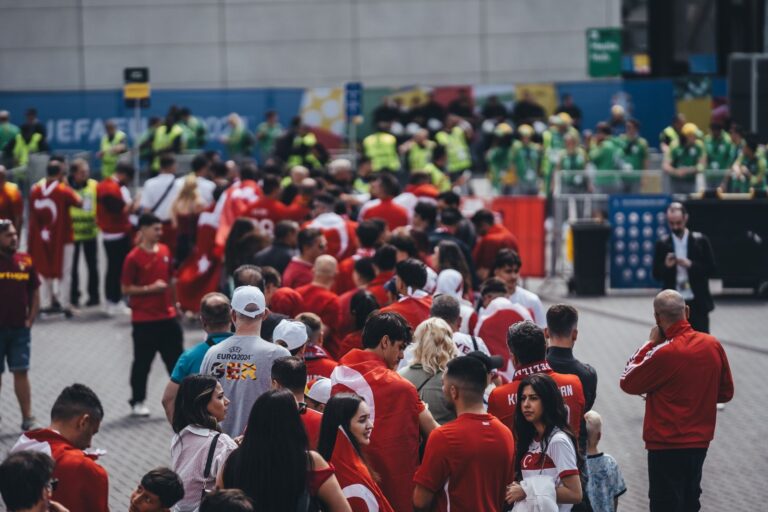
The ticket is the easy part. Arrival, the accessible lot, the drop-off curb, and the exit are where an LA game day goes wrong on wheels.
Dispersal rules, sightlines over standing fans, companion counts, and the resale trap. What is behind the wheelchair icon on a seating map.
Everything here comes from questions people actually send us. If yours is not answered, ask it.
They should. Federal ticketing rules require them to be sold at the same prices, in the same way, and at the same times as comparable seats.
You can, and it is the most common way to lose the seat at the gate. Venues are allowed to check the seat is being used by somebody who needs it.
Tell an usher during the game rather than after it. If the platform is not raised, the venue may have somewhere better to put you.
Two hours before the start if you can. Ramps, elevators, and restrooms are all at their easiest before the main crowd lands.
At many venues on event days, yes. Ask the ticket office directly, because a placard alone is often not enough.
Most stadiums will send an attendant if a counter is out of reach. Ask guest services when you arrive, not at halftime.
Ask which lots allow it and where the accessible spaces are within them. Tailgate lots fill in a different pattern from regular ones.
Same standard on every page. Nothing gets listed until we have been there on wheels.
Tell us where to go next. We check the lot, the gates, the restrooms, and the seating in person, then post the score.
We read every message.
The wheelchair accessible events, venues, and days out we checked in person, in one free PDF.