

Arts & Culture

Seeing from New Angles: Inside Mark Robert Halper’s ARTIFACTS at City Club LA | Accessible Event Guide
To navigate the world on wheels is to know intimately that the angle you are given
Museums, theaters, and galleries across LA, checked for step-free routes, elevators that reach every floor, and seats you can see the stage from.
Parking ✦ Routes ✦ Box office ✦ Restrooms ✦ Sightlines
Culture in LA lives in buildings from every decade of the last century, and it shows.
Access services like touch tours and captioned nights get scheduled, not switched on.
Empty galleries, working elevators, and staff with time to walk you through it.
Plenty of buildings have an elevator. Fewer have one that reaches the floor you want.
When the accessible route is a single side door, one locked gate ends the visit.
A lot of LA culture lives in buildings that went up long before anyone drew a ramp. We find out which ones sorted it out properly and which ones bolted on a side door.
Accessible spaces, garage clearance for a van, and the path to the entrance.
Step-free routes, elevators to every floor, and doorways wide enough for a power chair.
How staff book a wheelchair space, and whether a companion seat sits next to it.
Accessible stalls on the floors you will actually spend time on.
Where the accessible seats sit, and what you can see from them.
Call the box office instead of booking online. It is the fastest way to get a wheelchair space and a companion seat together, and the seating map online often will not sell you both.
The same five scores as everywhere else on the site. In this category the second one does the most work, because it covers the whole route through the building.
What a five looks likeAccessible spaces in the venue garage with posted van clearance, and a level route to the entrance.
What drops the scoreStreet parking only, or a garage with no height posted and no attendant to ask.
What a five looks likeOne main entrance everybody uses, elevators to every public floor, and doorways a power chair clears.
What drops the scoreA separate accessible entrance around the side, or an elevator that skips the gallery you came for.
What a five looks likeStaff who can book a wheelchair space over the phone and describe the sightline from it.
What drops the scoreA box office that says to “just turn up”, or one that cannot say where the space is.
What a five looks likeAccessible restrooms on every public floor, signed from the galleries.
What drops the scoreOne accessible restroom in the basement of a four-floor building.
What a five looks likeA cafe with reachable counters, table service, and space to sit that is not the busy corridor.
What drops the scoreA cafe up a step, or seating that is all high stools.
Historic buildings get judged on what they have done, not on when they were built. A 1920s theater that fixed its routes scores above a new building that did not.
The building type predicts the problem better than the programme does.
The best access in the category: elevators, loaner chairs, and trained staff.
Ask this. Ask about loaner wheelchairs and quiet hours. Both usually exist and neither is advertised.
Grand rooms, steep balconies, and accessible seating in one place only.
Ask this. Call the box office and ask where the wheelchair spaces are before you pick a show.
One room, one step, and nobody has ever been asked.
Ask this. Send a message the day before. A small gallery will often put a ramp out for you.
Built recently, designed properly, and the safest bet in the category.
Ask this. Ask about assistive listening and captioned performances, which these venues usually run.
No entry problem, all sidewalk problem.
Ask this. Check the sidewalk and the parking, because the art itself is never the issue.
Access is real but signage is not, and the route can be long.
Ask this. Ask for the accessible parking lot by name and the walking distance from it in yards.
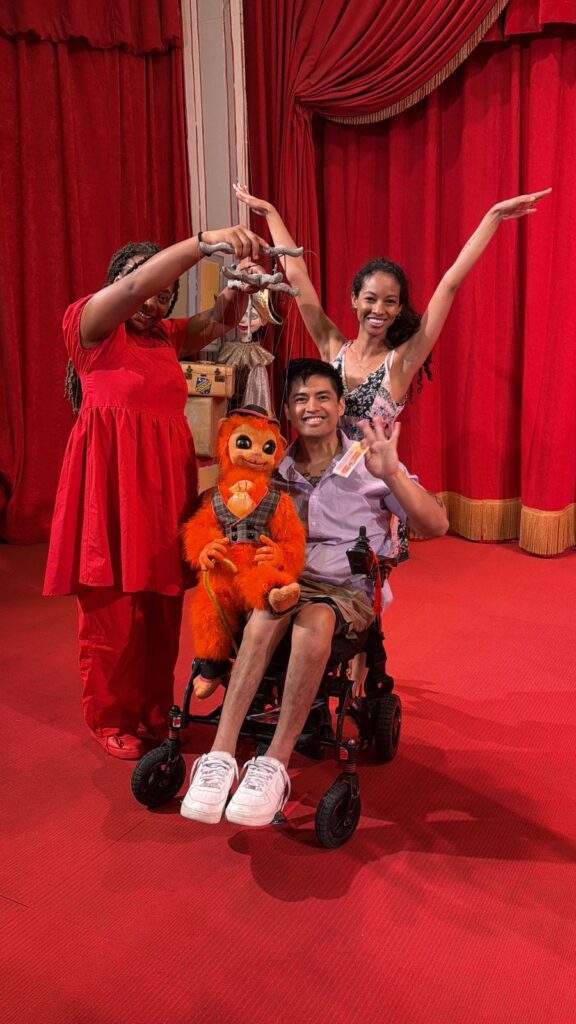
Ask for the box office rather than the switchboard, and ask on a weekday morning when somebody has time to answer properly.
Ask about access services in the same call. Audio description, captioning, touch tours, and relaxed performances all get scheduled in advance and almost none of them are bookable online.
A big museum is more ground than almost anyone plans for, and each of these runs out in a different way.
Mileage. A full day in a large museum is a long push on a hard, flat floor.
Do this. Ask whether the museum loans a wheelchair, because a loaner plus a pusher saves the afternoon.
Doorways. Older buildings have narrow gallery openings and heavy fire doors.
Do this. Ask for the clear width of the narrowest doorway on the route you want.
Turning. Gallery layouts with rope barriers and plinths leave very little room to swing a tiller.
Do this. Ask whether scooters are allowed in the galleries, because a few venues restrict them and offer a loaner chair instead.
These are the five we hit most often in old buildings.
Ask which floors the elevator serves, by number, before you buy a ticket.
Confirm the door is staffed for evening performances, and get the name of who to call.
Ask what the sightline is from the space, and ask whether it is raised.
Buy both on the same call and read the section and row back to them.
Find out before the show, not during the interval when everybody moves at once.
Culture venues have the widest gap between their easiest hour and their hardest.
Empty galleries, staff free, and elevators to yourself.
The best access of the week.
School groups arrive and the elevators start queuing.
Still good. Plan around the elevator.
Full building, slow elevators, and no room in front of the popular works.
Go early or go another day.
Crowded, standing, and every route full of people holding a glass.
Great atmosphere, hard floor.
Calm building, but a single interval where everybody moves at once.
Beat the interval by five minutes.
The buildings are mostly sorted. The thing that goes wrong is everything before the front door.
If a venue has its own accessible drop-off, use it even if it means a longer drive. It is nearly always better than the nearest garage.
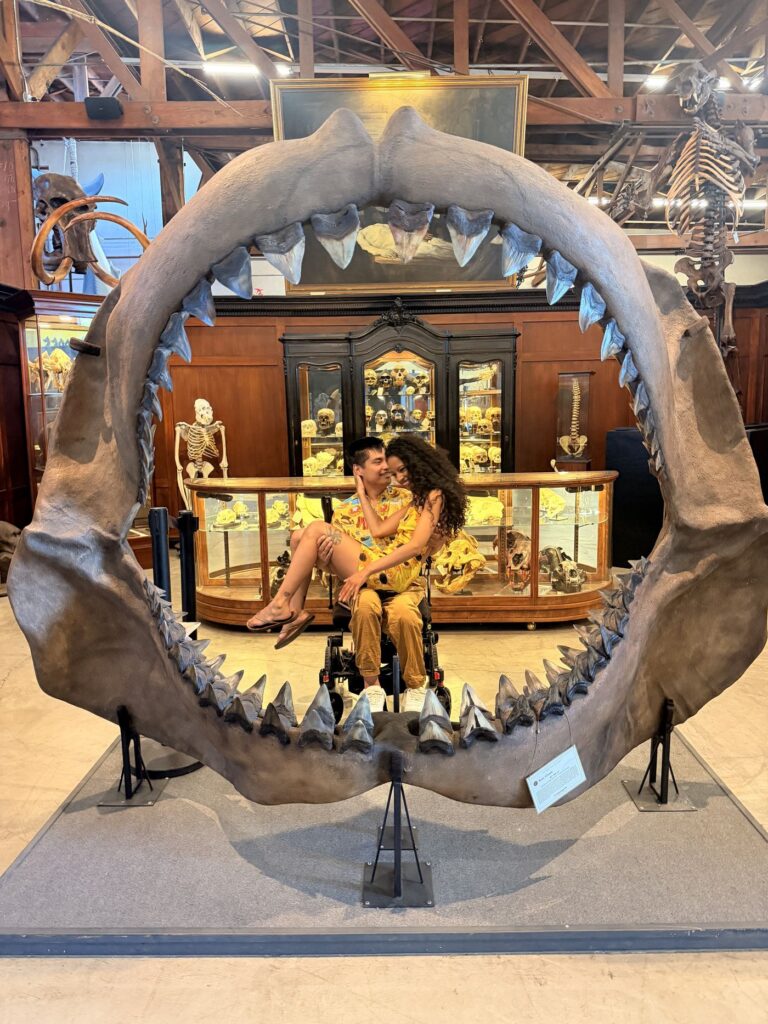
Museums are long, quiet, and further than they look on the map.
Gallery days are long sitting days on hard floors.
A big museum is a mile of floor before you have seen half of it.
Audio guides are often on your own phone now.
Signal is bad inside thick old buildings.
Galleries are climate controlled and colder than you expect.
It is the fastest fix if the seat is wrong.
Online seat maps in this city rarely sell a wheelchair space and a companion seat together. This is the sequence that does.
Decide the date first. Accessible seating is a fixed handful of spaces, so the seat choice is mostly made for you.
Not the ticketing platform. The venue holds its own accessible inventory and the platform frequently cannot see it.
Height, rail, and whether the row in front stands. A space at the back of the stalls behind a rail is a different show.
Say “wheelchair space plus one companion” as a single request. Split transactions land in different rows.
Captioned, audio described, and relaxed performances are usually one date in a run, and they sell slowly, so you can still get a good seat.
Ask them to read the section and row back to you, and check the accessible entrance is staffed for that performance.
Culture venues have more staff on the floor than any other category here, which makes an in-person fix far more likely.
Larger venues employ somebody whose job this is. Front-of-house will know who.
Once the performance starts, the options shrink to nothing until the interval.
If a lift or a door is out, the answer should be a specific other route rather than an apology.
Access teams keep records, and a name lets them find yours.
Most will fix it and tell you what changed. If a venue will not, there is a federal complaint process at ada.gov.
Reviews, access breakdowns, and event notes from wherever we rolled through most recently. New museum and theater write-ups land here as we publish them.
To navigate the world on wheels is to know intimately that the angle you are given
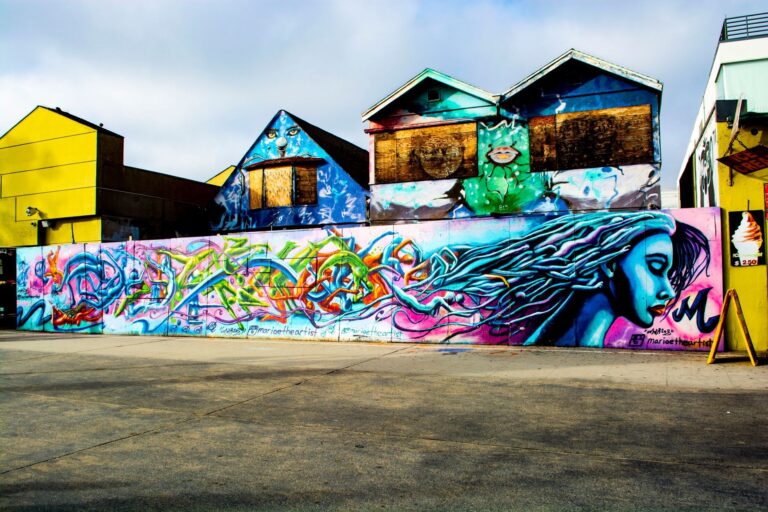
A museum is one building with one access page. A gallery day is ten small storefronts and no page at all. Plan the route, then pick the shows.
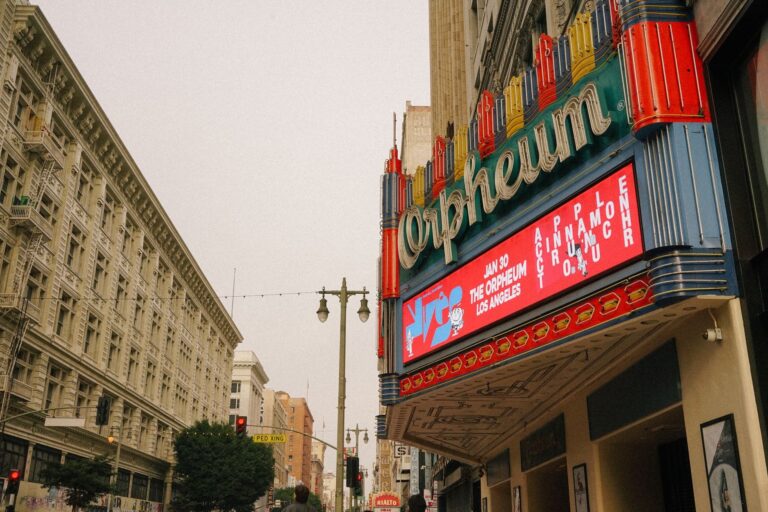
A wheelchair space is not a seat, the good ones hide behind a filter, and only one companion is ever guaranteed. The booking process, explained.
Everything here comes from questions people actually send us. If yours is not answered, ask it.
Older buildings have more room to negotiate than new ones, which is why access varies so much across this category. The question to ask is what a venue has done, not what it is required to do.
Sometimes, and it is still worth calling. Phone booking is the only reliable way to get the space and the companion seat together.
A performance with the house lights up, the sound softened, and freedom to move or make noise. Venues run them for a handful of dates per run.
Many of the larger ones do, at no charge, and almost none of them advertise it. Ask when you call and ask whether it needs reserving.
Audio description, touch tours, captioned performances, and ASL interpretation all exist in this city, on scheduled dates. Ask the box office which dates.
Say so at the time, in the building. Venues can usually move you while the show is running and can do nothing about it afterwards.
Yes. Small spaces are the ones with the least information out there, so they are the ones our write-ups help with most.
Same standard on every page. Nothing gets listed until we have been there on wheels.
Tell us what to see next. We check the parking, the route through the building, the restrooms, and the seats in person, then post the score.
We read every message.
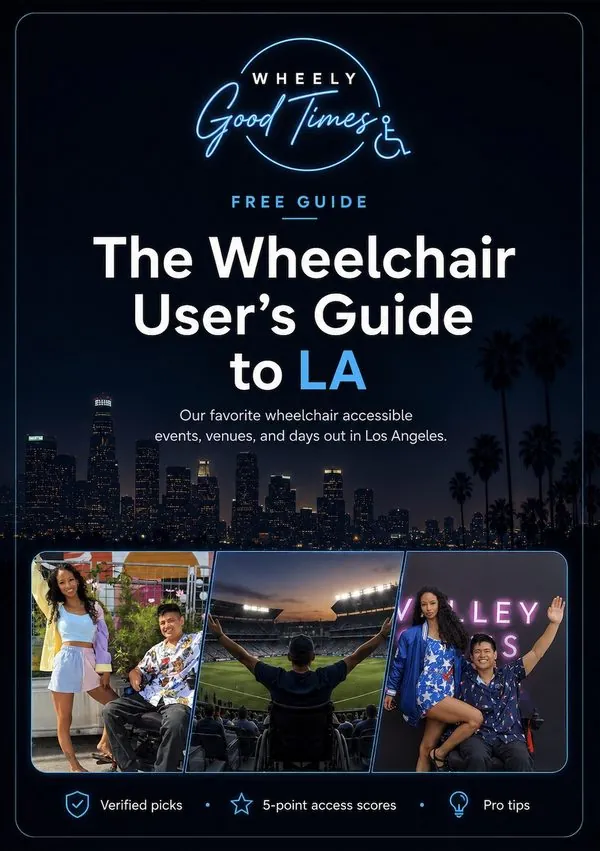
The wheelchair accessible events, venues, and days out we checked in person, in one free PDF.