
Getting to an LA Venue and Home Again: Every Option and Its Real Limit
Driving, Metro, Access paratransit, and WAV rideshare all work in Los Angeles. Each one has a limit that can end a night early, so this is where each of them stops.
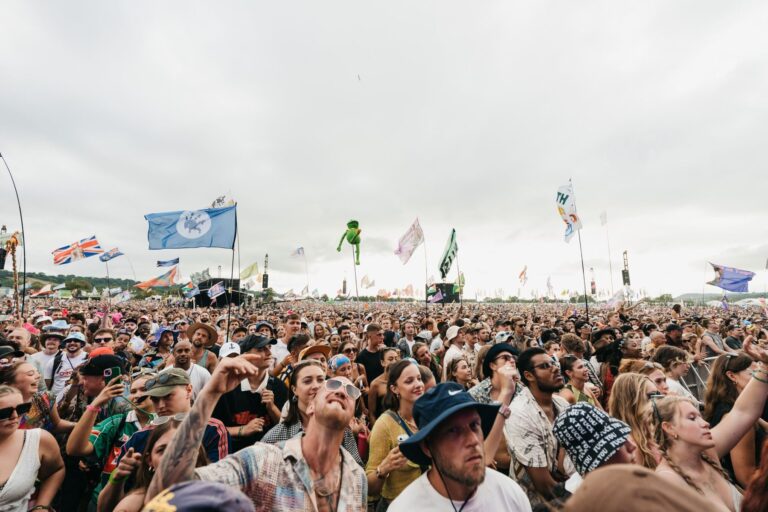
Festivals, games, and shows around LA, checked for accessible entry, a seat that still has a view once the crowd stands up, and a way out that does not take an hour.
Parking ✦ Gates ✦ Box office ✦ Restrooms ✦ Sightlines
An event is the one category where the decision is made weeks before the day.
Accessible seating is a small block, and it sells at the same speed as the good seats.
Arriving with the first wave gets you ramps and elevators before the crush.
Gate access is usually sorted. The quarter mile before it is the part nobody plans.
A platform with a clear view at soundcheck can have none by the second song.
Event access falls apart in the gaps: the walk from the lot, the one working elevator, and the platform behind a standing crowd. We test all of it on the day.
Accessible lots, rideshare points, and the real distance to your gate.
Step-free gates, ramp grades, elevators, and concourse room on a full house.
How staff handle accessible seating and whether a companion seat comes with it.
Where the accessible stalls are, and how far you travel to reach one.
Whether the wheelchair platform can still see the stage once everyone is on their feet.
Leave before the encore if the whole crowd funnels into one ramp. Ten minutes early can save you forty in the crush.
The same five scores run on every write-up, and the overall is their average. At an event, sightlines are the one that catches people out.
What a five looks likeAccessible parking you can reserve, on a step-free route to your gate, with staff who know that route.
What drops the scoreAccessible parking on the far side of the site, or a shuttle that cannot carry a power chair.
What a five looks likeA step-free gate open for the whole event, wide lanes, and elevators that stay staffed.
What drops the scoreOne accessible gate at the opposite end of the venue, or a ramp doubling as a service route.
What a five looks likeStaff who can point to the accessible restroom and the platform without radioing anybody.
What drops the scoreBeing handed between three people, or a guard who moves you off the platform for somebody else.
What a five looks likeAccessible stalls on your level, within a few minutes, and enough of them for the crowd size.
What drops the scoreOne accessible restroom for the whole site, or a line with no separate access.
What a five looks likeConcession counters with a low section, staff who will carry a tray, and space to eat.
What drops the scoreEvery counter at standing height, and food stalls with no reachable service point.
Sightlines get called out separately in the write-up, because a five for entry and a one for the view is a common event shape and the average hides it.
A ticketed arena show and a free street fair fail in opposite ways.
The most predictable of the lot: assigned accessible seating and staff trained for it.
Ask this. Buy direct from the venue. Resale tickets for accessible seats often will not transfer with the seat.
Grass, gravel, cable ramps, and a viewing platform you have to find.
Ask this. Email the access team a week out and ask where the platform is and whether it needs a wristband.
Free, unticketed, and no access team at all.
Ask this. The curb cuts and the portable restrooms are the whole story. Scout the map before you drive in.
Small rooms, fixed seating, and a handful of wheelchair spaces.
Ask this. Call the box office. Online seat maps rarely sell a wheelchair space and a companion seat together.
Long sightlines, deep crowds, and a curb between you and the route.
Ask this. Ask the organizer where the accessible viewing area is, then get there two hours early.
Huge halls, long distances, and carpet that eats battery.
Ask this. Map the accessible restrooms on arrival and plan the day around them, not around the panels.
Phone rather than email. A ticket agent can hold a seat while you are talking, and an inbox cannot.
Federal ticketing rules say accessible seats have to be sold the same way, at the same times, and at the same prices as other seats, and you are entitled to at least one companion seat. If a seller tells you otherwise, ask for a supervisor.
Event sites punish each of these in a different way, and the distances are what expose it.
Distance and camber. A long push across a cambered lot before the show is what wrecks the evening.
Do this. Ask for the closest accessible lot and take a push assist if one is offered.
Battery. A festival site can be several miles of ground across a day.
Do this. Ask whether there is anywhere to charge, and go in with a full charge rather than an estimate.
Footprint. Wheelchair platforms are sized in chair-width bays and a scooter often needs more.
Do this. Tell the box office you use a scooter when you book, so the bay is the right size.
Every one of these has an early move that defuses it.
Reserve parking with the ticket if the venue sells it, and arrive on the early edge of the window.
Ask for platform height before you buy. A raised platform survives a standing crowd, a floor space does not.
Confirm the gate is staffed all night, and get the name of the alternative.
Sort it at the box office, not at the gate. Nobody is moving seats once the room is full.
Leave a song early, or wait twenty minutes and let it clear. Both beat sitting in the funnel.
Arrival and exit are the two pinch points. The show in the middle is the easy part.
Lots half empty, gates opening, and staff still fresh.
The cheapest hour you will ever spend.
Lines form, elevators back up, and the concourse fills fast.
Fine if your gate is close. Rough if it is not.
Concourse quiet, restrooms free, and concessions short.
The window for anything that is not watching.
Half the crowd already moving, one ramp taking all of them.
Go now or wait it out. Do not join it.
Site empty, lot clearing, and staff packing up.
The calmest exit, if you can spare the time.
Event venues are built around a parking lot and a crowd flow. Neither of them is designed around you.
Whatever the plan is, have a second one. The most common bad night we hear about is a good event and no way home.
Events run longer than you plan for. Pack for the version that overruns.
Phone dies, ticket dies. Screenshot the ticket as backup.
You need both hands, and stadium staff will take an umbrella off you anyway.
Platforms often sit near a speaker stack.
Faster than a phone in a crowd, and it survives a dead battery.
Most venues let a sealed bottle in and almost none let an open one.
LA drops fast after dark, and you are sitting still for four hours.
This is the process that works, in the order that works. Most of the bad outcomes come from doing step four first.
Sign up for the venue mailing list, not the artist one. Venues announce accessible seating separately and often earlier.
Skip the resale sites. Accessible seats bought second hand frequently will not transfer, and you can be turned away at the gate.
Say it in one sentence. Booking them separately is how they end up in different sections.
An email with the section and the words “wheelchair space” is what you show at the gate if anything is wrong.
Gates and routes change with the event, and the answer you got at purchase can be two months stale.
Anything wrong with the seat is fixable an hour before doors and unfixable once the room is full.
Event problems are fixable while the event is running and almost never afterwards.
Ushers cannot move you. Every big venue has a guest services desk that can, and it is on the map.
A blocked view reported at the end is a refund conversation. Reported in the first twenty minutes it is a seat change.
A different platform, a staff member to keep the walkway clear, or a refund. Ask for one thing.
Both of them turn a follow-up email into something the venue can trace.
The venue owns the building and the access. If it refuses to fix a real barrier, there is a federal complaint process at ada.gov.
Reviews, access breakdowns, and event notes from wherever we rolled through most recently. New event write-ups land here as we publish them.

Driving, Metro, Access paratransit, and WAV rideshare all work in Los Angeles. Each one has a limit that can end a night early, so this is where each of them stops.

At an outdoor festival the ground is the venue, and it changes with the weather and the crowd. Surfaces, platforms, shade, restrooms, and battery, in the order they hit you.

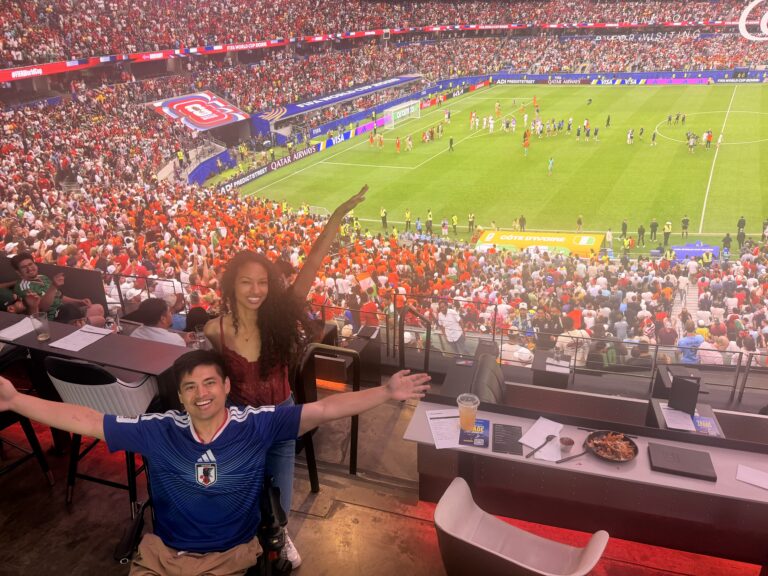
A wheelchair space is not a seat. It is sold, held, and released differently from every other ticket in the building, which is why the map says sold out while the box office does not.
Everything here comes from questions people actually send us. If yours is not answered, ask it.
They should not. Federal rules require them to be sold at the same prices as comparable seats, in the same way, and at the same times.
At least one next to you, by law. Larger groups are usually possible but the venue decides, so ask on the call.
You can, and it is the single most common way people lose the seat. Venues are allowed to check that the seat is being used by somebody who needs it.
Tell an usher immediately rather than at the end. Most venues have somewhere else to put you, but only while the show is still running.
Yes, with a call first. Ask about the viewing platform, the surface between stages, and whether there is a wristband to collect.
Power chairs, scooters, and service animals are fine. Ask ahead about anything that looks like a tripod or a stand, because those get stopped at the gate.
Yes, and they need the coverage more. Free events rarely have an access team, so what we find is often the only account of it.
Same standard on every page. Nothing gets listed until we have been there on wheels.
Send us the date and the venue. We check the lot, the gates, the restrooms, and the seating in person, then post what we find.
We read every message.
The wheelchair accessible events, venues, and days out we checked in person, in one free PDF.