
Indoors, a building either works or it does not. Outdoors, the venue is a field, and a field changes with the weather, the crowd, and wherever the trucks drove in.
Everything below is a question for the event’s access team rather than a rule you can assume. Every large festival has one, usually behind an accessibility link at the bottom of the site, and they answer email.
The ground is the venue
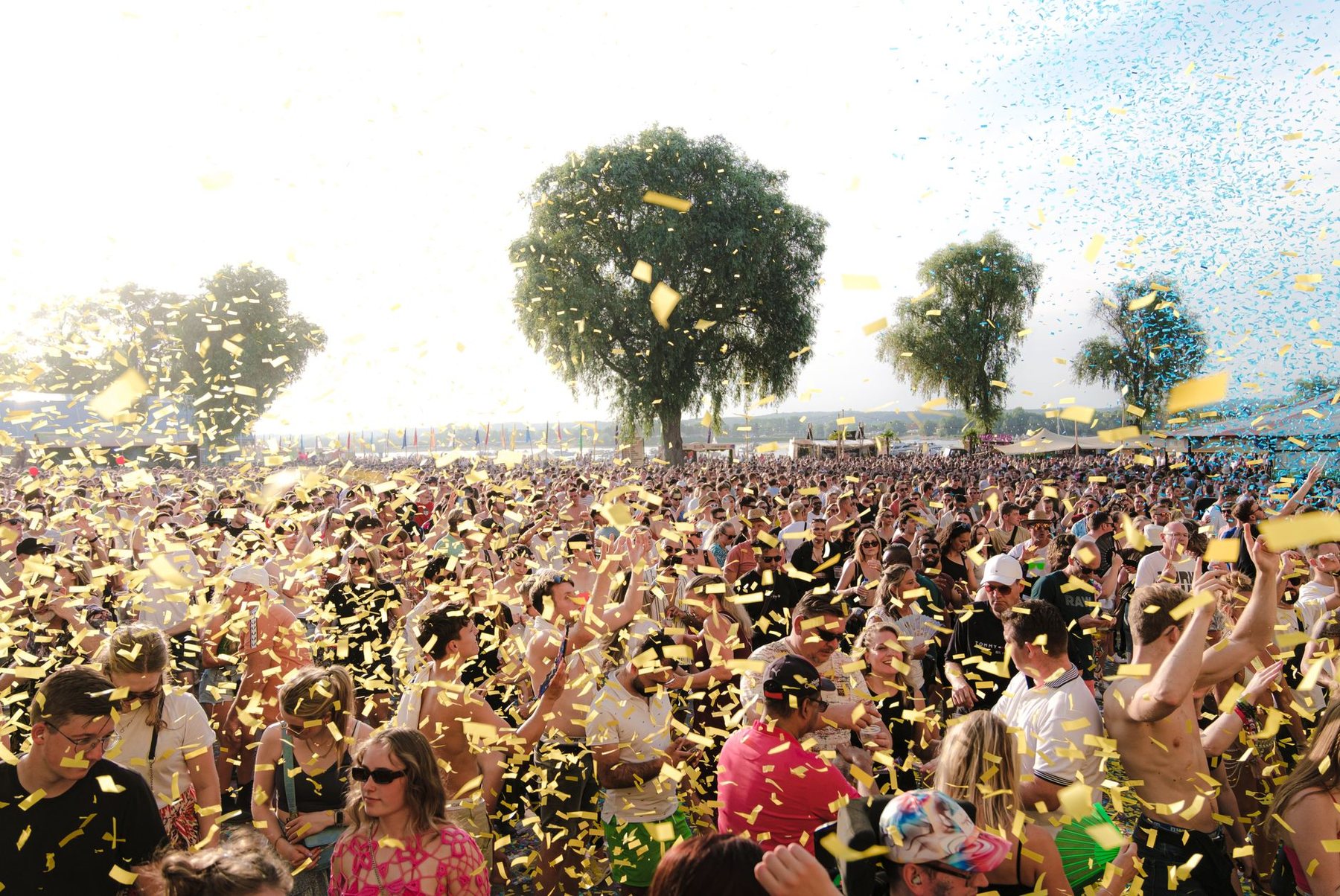
Grass is fine until forty thousand people walk on it. Decomposed granite, the tan gravel that surfaces half the parks in this county, packs hard and then loosens into ruts that grab small front casters. Loose gravel is worse than either.
Ask what the site is surfaced in, and ask whether the event lays temporary trackway from the gates to the stages. Roll-out matting is standard at well-run festivals and missing at others, and the answer changes how far you can realistically get.
Accessible viewing platforms
A raised platform with a clear sightline is the standard fix for a standing crowd. How you get onto one varies enormously between events.
Ask whether it is first come or wristbanded, how many companions come with you, whether the ramp is at the front or the back, and how far the nearest accessible restroom is. Ask whether the platform sits near the sound desk, because that spot is usually the best audio in the field.
Heat is a planning problem
LA’s festival season runs through the hottest part of the year, and a field with no trees is hotter than the forecast says. Power chair electronics do not enjoy it either.
Plan the day around the sun rather than the lineup. Arrive for the late afternoon instead of noon, find the shade before you need it, and carry more water than seems reasonable. If your cushion traps heat, a cooling towel over it earns its space in the bag.
Restrooms, and the pad they sit on
Accessible portable restrooms are usually there. They are also usually at one end of the site, and a unit is only usable when it sits on a firm level pad instead of straight onto grass.
Ask how many there are and where they are. If the answer is one bank by the main gate, that shapes your entire route for the day.
Power
Ask whether the accessible viewing area or the medical tent has an outlet you can use. Some events say yes without blinking. Others have never been asked, and you will hear that in the pause.
Either way, treat the day as a battery problem. Distance on soft ground pulls far more than the same distance on pavement, so the range you get around the city is not the range you get in a field.
Getting in, and getting out
The accessible entrance is often a different gate from the general one, and it is often on the far side of the site from where a rideshare will drop you. Ask for the gate name, then map the distance from the drop point to that gate before you book anything.
Leaving is the harder half. Everyone exits at once, the rideshare pins move to a lot you cannot see from the gate, and the ground you crossed on the way in has been churned up by a day of foot traffic. Decide your exit time before the headliner starts.
The email to send
One message to the access team covers most of this. Give them your setup, then ask the specifics.
- What is the ground surface, and is trackway laid to the stages?
- How does the accessible viewing platform work, and how many companions come with me?
- Where are the accessible restrooms?
- Which gate do I use, and where can a vehicle drop me?
- Is there anywhere to charge a power chair?
Send it early. Access teams answer, and they answer far better in the weeks before an event than in the week of it. Once you have the gate, work out how you get there and back.
More festivals and big nights are on the Events & Shows page. The free LA guide shows what every venue publishes about its own access, next to the score cards we have run in person so far.