
A museum is one building with one accessibility page. A gallery day is eight or ten small buildings, most of them older storefronts, and almost none of them publish anything about access at all.
So the planning flips. You build the route first, then decide which shows are worth putting on it.
Galleries are small businesses in old buildings
LA’s gallery clusters sit in converted industrial space and older commercial strips: the Arts District, Culver City, Hollywood, and the run of spaces around La Cienega. Plenty of those buildings went up before the ADA and were altered piecemeal afterward.
An old building is not automatically a problem. A single four-inch step at a glass door with no bell is.
Their websites will not tell you either way. The contact page is usually an email address and an Instagram handle.
Do the recon by street, not by gallery
Street View is the best access tool nobody markets as one. Drop into the address, look at the door, and count the steps. You can usually see the threshold, the sidewalk grade, and whether the curb ramp is at the corner or halfway down the block.
Check the date on the imagery before you trust it. A three-year-old capture in a district that renovates constantly is a hint, not a fact.
Look at the sidewalk too, not only the doorway. Construction fencing, a driveway apron with a steep cross slope, and a bus stop shelter parked in the middle of the path all cost you time and none of them show up on a map.
Anchor the day on a restroom
This decides how long the day can run, and it is the thing people plan last.
Small galleries often have no public restroom at all, and the ones that do may have a single stall behind a storeroom. Assume nothing.
Pick one reliable accessible restroom in the district, usually at a museum, a large cafe, a hotel lobby, or a public building, and build the loop so you pass it twice. Then the gallery stops can be as small and unpredictable as they like.
Parking is the other anchor
Street parking in gallery districts is metered and tight, and a van with a side ramp needs the space beside it empty. A garage with marked van-accessible spaces is worth the extra money and the extra two blocks.
California gives disabled placard and plate holders free parking at on-street meters, with no time limit, which helps a lot in these neighborhoods. The DMV lists the privileges here. Off-street private garages can still charge, and a legal space is still no use if there is no room to deploy a ramp, so aim for an end space or a corner.
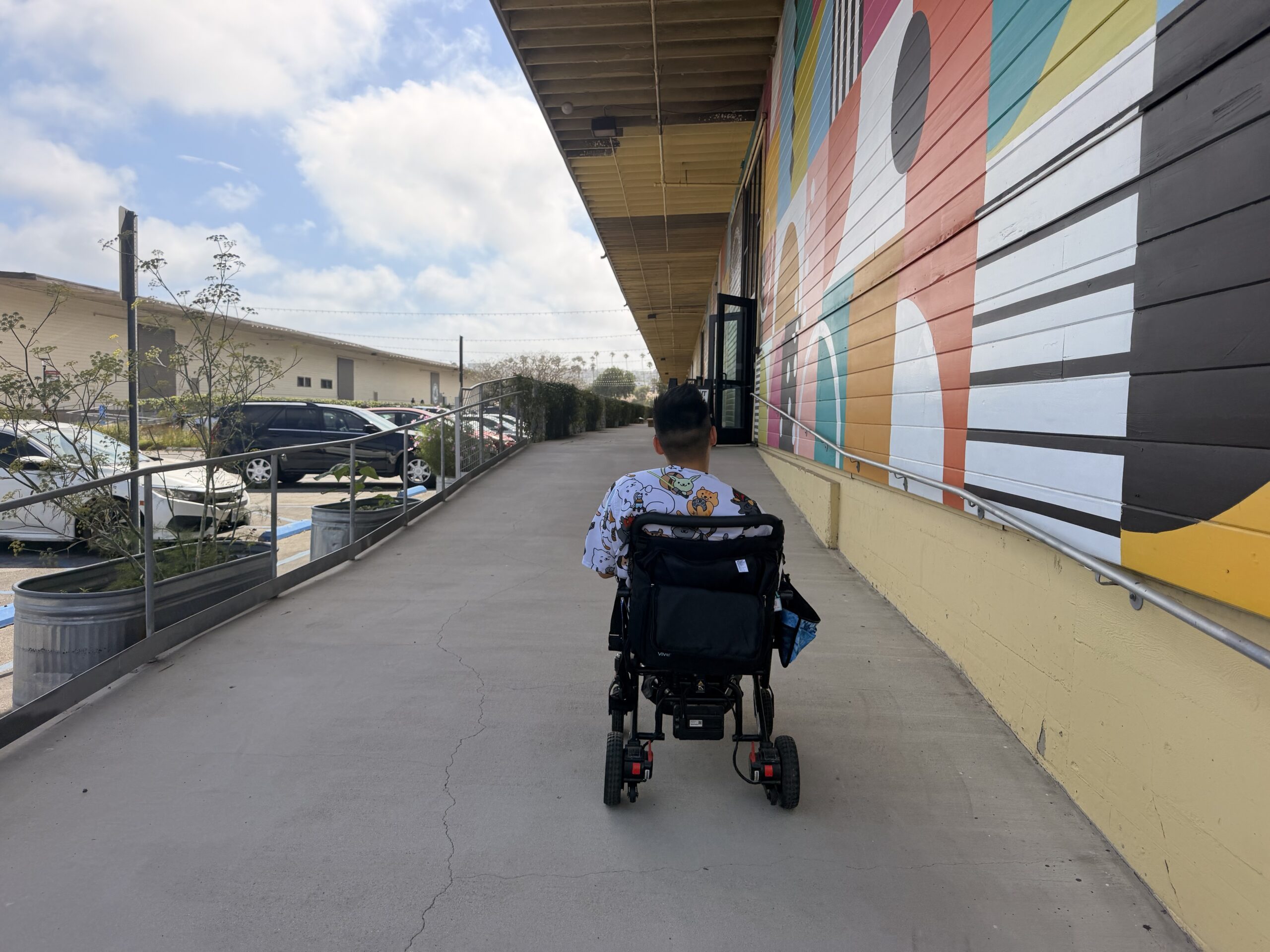
Three or four stops, not eight
A gallery day on wheels runs slower than the same day on foot, and the slow part is between the stops rather than inside them.
Book three or four and treat anything past that as a bonus. A short day you finish beats a long day you abandon at stop five with a dead battery.
Email ahead, because they answer
Small galleries answer email faster than large institutions answer phones. One message does it: “I use a power chair. Is there a step at your entrance, and is there an accessible restroom in the building?”
A reply means you can plan. No reply is also useful information, and it costs you nothing to have sent it.
Pick the wrong night on purpose
Opening receptions are the worst possible time to do this on wheels. The rooms fill, the aisles vanish, and the front door gets held open by a crowd standing in it.
Go on a weekday afternoon instead. The gallery is empty, the person at the desk has time to talk, and you can actually see the work.
None of this is a rating of any gallery. It is a method, and it works on any district in the city. When we do start scoring individual spaces, it will be under the same five checks we use everywhere else.