
A restaurant can be step-free at the front door and still have nowhere for you to sit. That gap is why five minutes on the phone beats an hour of reading reviews.
Booking platforms hand you a time and a party size. They say nothing about how high the tables are, whether the base is a center pedestal that swallows your footplates, or whether the step-free route to the patio runs through the kitchen.
So we call. These are the questions, in the order we ask them, and what each answer actually tells you.
Ask for a manager, and call in the afternoon
A host is working a wait list and a seating chart. A manager or shift lead knows which tables are bolted down, which threshold has a lip, and who holds the elevator key on a Saturday.
Call between 2 and 4 on a weekday. Nobody is in a rush, and whoever picks up can walk the room while you talk.

1. How high are your tables, and what is the base?
The ADA standards put accessible dining surfaces between 28 and 34 inches off the floor, with at least 27 inches of knee clearance underneath. Most restaurant tables already land in that range.
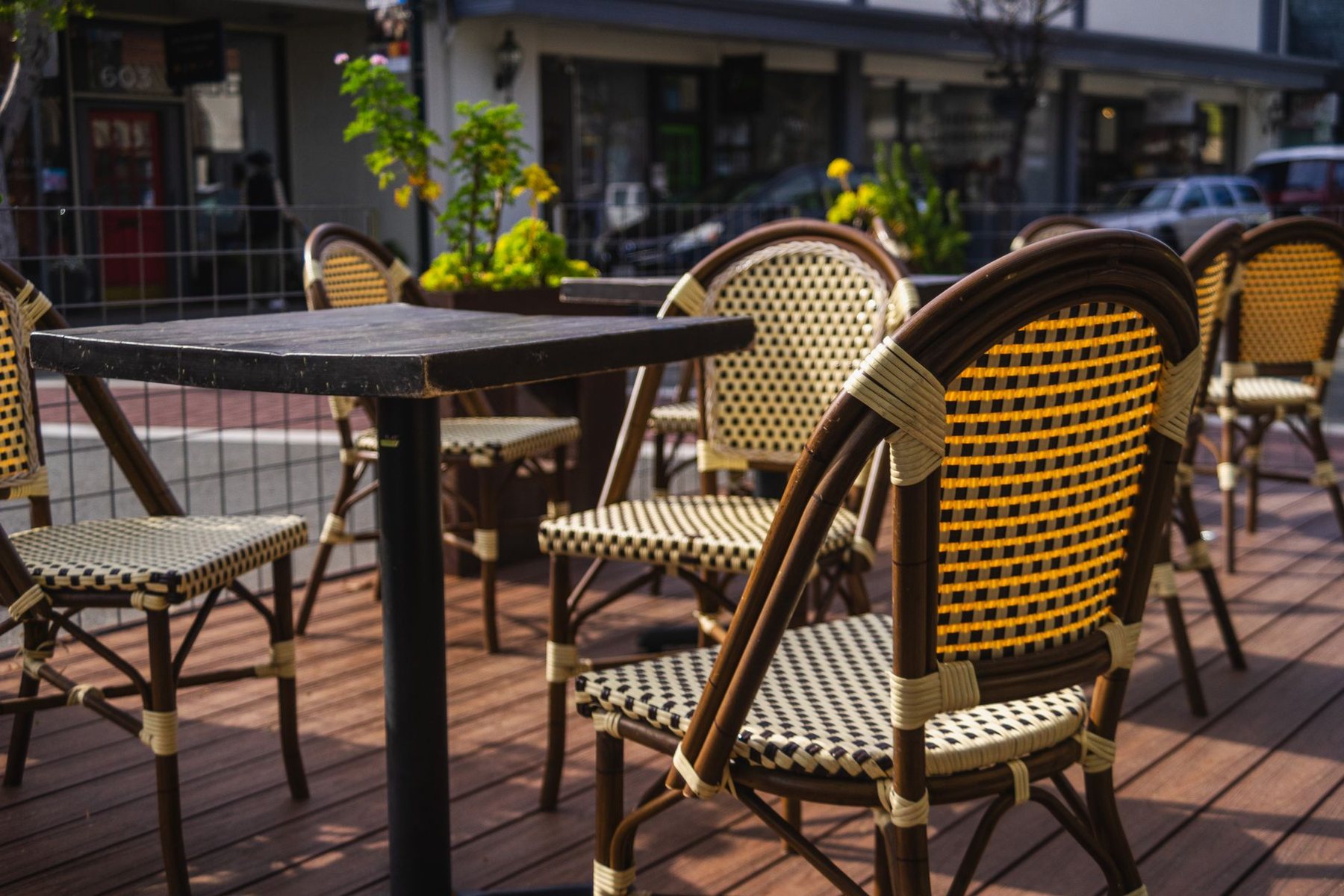
The base is where it falls apart. A single center pedestal with splayed feet, or a heavy trestle, eats the space your knees and footplates need even when the top is the right height.
Ask whether any tables have four corner legs. It sounds fussy on the phone. It decides whether you eat at the table or beside it.
2. How many tables can seat a wheelchair user, and where are they?
At least five percent of a restaurant’s seating has to sit at accessible dining surfaces, and those seats have to be spread through the room rather than parked in one corner.
Five percent of a sixty-seat room is three seats. Ask which three. Then ask what is next to them, because a table that meets the letter of the rule and sits in the service lane by the kitchen door is still a bad dinner.
3. Is the patio step-free, and what is the threshold like?
LA’s outdoor dining rules require a clear pedestrian path around sidewalk dining, at least four feet wide between the tables and fixed street furniture like poles, meters, and tree wells, with wider passing areas at intervals.
That covers the sidewalk you travel along. It says nothing about getting into the dining area itself. On-street parklets sit up at curb height, so there is a ramp somewhere. Ask where it is, how long it is, and whether it is built in or a portable plate the staff put down when they remember.
4. Where is the accessible restroom, and what is in it?
Ask which floor, how wide the door is, and whether the stall is kept clear. That last question gets an awkward pause more often than a yes, and the pause is the answer.
If the restroom is downstairs and the lift needs a staff key, ask who holds that key at 9pm on a Saturday. “Someone will be around” is not a plan.
5. What is the parking, and where is the nearest curb ramp?
Flag valet-only in advance. A valet stand can hold a spot when somebody knows you are coming, and cannot when nobody does.
Ask which corner has the curb ramp. Los Angeles settled a class-action lawsuit over its sidewalks and agreed to spend around $1.4 billion over thirty years on curb ramps and broken sidewalks, which tells you what the network looked like going in. The repairs are real and they are uneven, block by block.
When the answers are bad
You can thank them and book somewhere else. You can also ask them to fix it for one night, which works more often than people expect.
Ask them to hold a specific table and put the table number on the reservation. A number in the notes carries far more weight than the word accessible in a checkbox.
If a restaurant offers to “make it work when you get here,” that is a no. Take it as one.
Keep the name
Put the name of whoever helped you straight into the reservation note in your phone. When you arrive and the table is wrong, that name plus the table number fixes it fast. Starting the whole conversation over at the host stand does not.
The same call works on a bar, a theater box office, and a food hall. We keep a shorter version of it as five questions to ask any LA venue before you roll in, and the long version lives here because restaurants have the most moving parts.
More dining research lives on the Dining page, and the free LA guide shows what every venue publishes about its own access, next to the score cards we have run in person so far.